

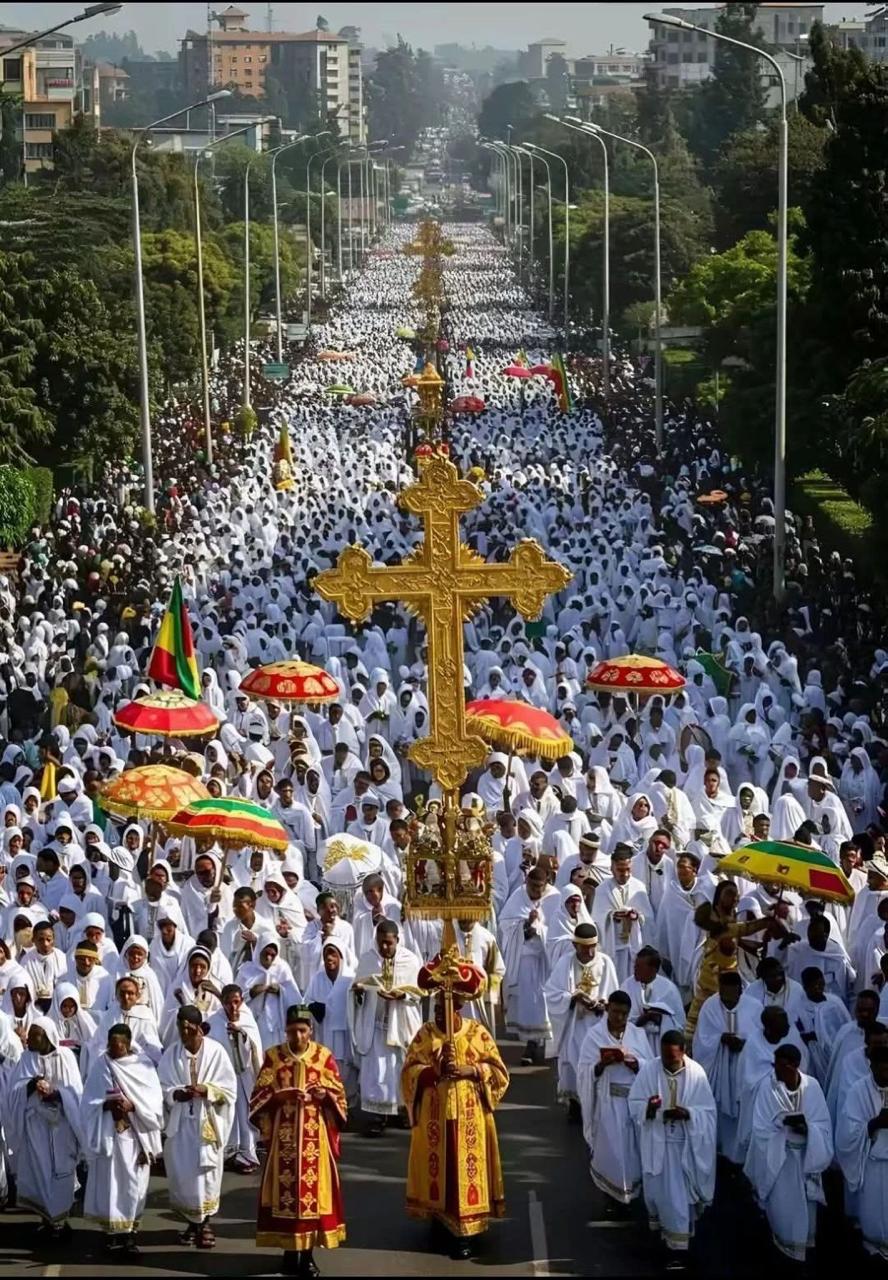
Timket, also known as Epiphany or Baptism of Jesus, is the most important religious festival in the Ethiopian Orthodox Christian calendar. Celebrated on January 19th (or 20th in leap years), it commemorates the baptism of Jesus Christ in the Jordan River.
Festival Traditions The celebration begins in the evening with a procession of priests carrying the Tabot (replicas of the Ark of the Covenant) through the streets. The Tabot are kept in underground chambers called "bet" within the church throughout the year and are brought out only for this special occasion. The sight of priests and deacons in brightly colored robes carrying ornate umbrellas, followed by thousands of pilgrims with candles and drums, is truly unforgettable.
The Water Ceremony The most dramatic part of Timket takes place on the morning of the festival. Pilgrims gather at designated water sources—rivers, lakes, or specially prepared pools. After a solemn religious ceremony, priests bless the water, and pilgrims wade into the water fully clothed to be baptized. This symbolic washing away of sins is central to the festival's meaning.
The Feast After the water ceremony, celebrations continue with feasting, dancing, and merrymaking. Communities gather to enjoy traditional Ethiopian food and drink, celebrate with family and friends, and enjoy live music and performances.
Most Famous Celebrations The most well-known Timket celebration takes place in Addis Ababa at the Holy Trinity Cathedral, but celebrations happen throughout Ethiopia. The celebration in Lake Tana near Gondar is particularly spectacular, with pilgrims traveling from across the country to participate.
Visiting During Timket If you have the opportunity to visit Ethiopia during Timket, it's an experience not to be missed. The spiritual intensity, the colorful displays, and the sense of community are powerful and moving. Respectful observers are welcomed, but remember to dress modestly and follow local protocols when participating in religious ceremonies.
Timket is a testament to the depth of faith and the richness of Ethiopian religious and cultural traditions.