

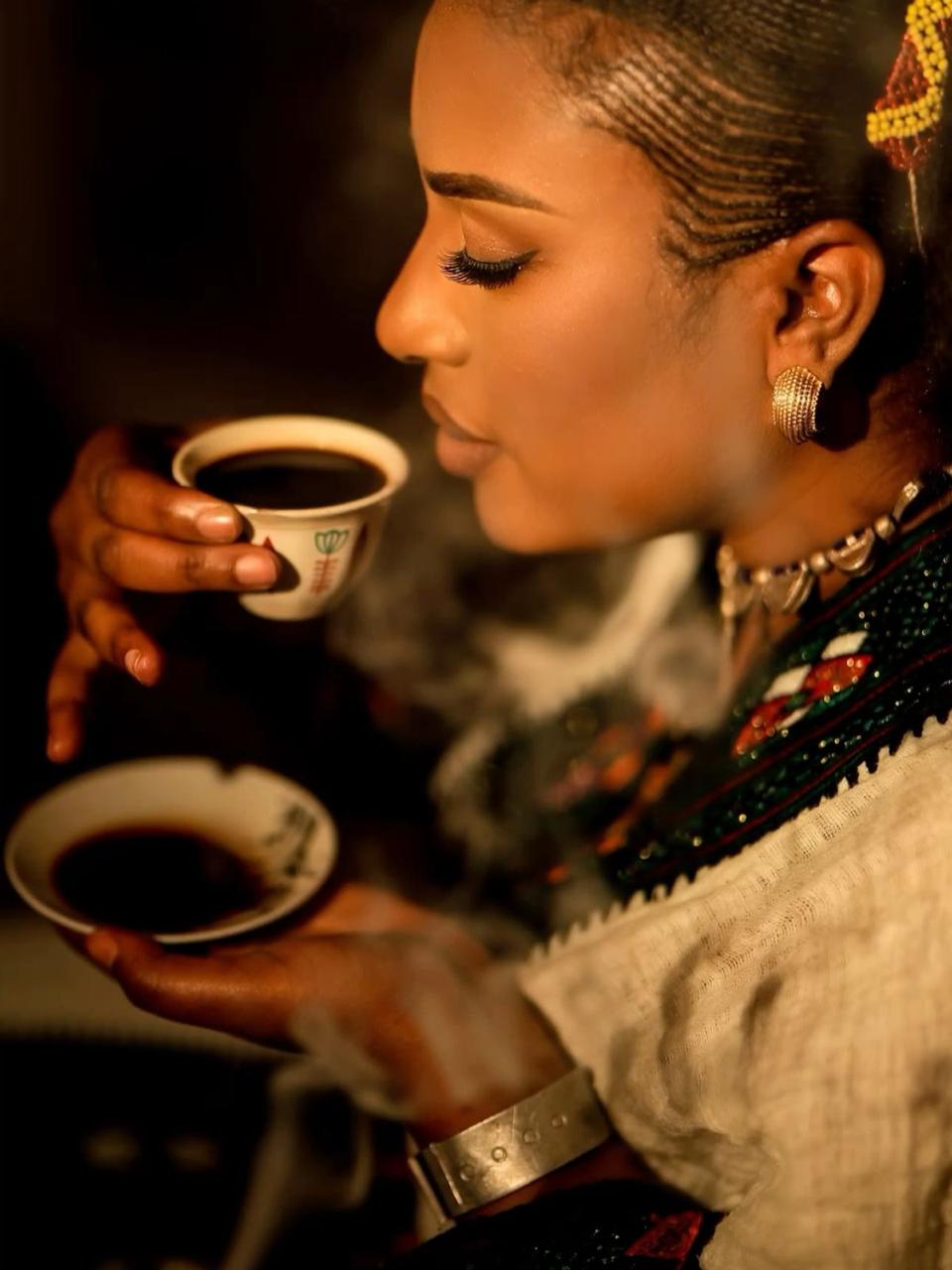
The Ethiopian coffee ceremony, known as "jebena buna," is one of the most important social rituals in Ethiopian culture. It's not just about drinking coffee; it's a symbol of respect, friendship, and community.
The ceremony begins with the roasting of green coffee beans over an open flame. The aroma of roasting coffee fills the air, creating an anticipation for the beverage to come. The roasted beans are then ground by hand using a mortar and pestle, releasing their rich fragrance.
The ground coffee is placed in a traditional clay pot called a "jebena" with hot water and brewed to perfection. The coffee is then poured into small handleless cups called "cini," which are passed to guests starting with the most honored guest.
The ceremony is typically served in three rounds: the first cup is called "abol" and is the strongest and most concentrated. The second round, "tona," is slightly weaker, and the third round, "baraka," is the weakest but is considered the most blessed. Each round represents a different stage of hospitality and friendship.
To be invited to an Ethiopian coffee ceremony is to be honored and welcomed into the family. Refusing to participate can be seen as disrespectful, which speaks to how important this ritual is in Ethiopian society. The ceremony often lasts for hours and is accompanied by lively conversation, laughter, and sometimes traditional music and dancing.
Understanding the coffee ceremony provides deep insight into Ethiopian values of hospitality, community, and connection.